I’ve spent a lot of time talking with physicians, pharmacists and patients over the years about the benefits of probiotics. The topic that comes up most frequently when I talk to people is how probiotics help those who suffer daily from symptoms related to irritable bowel syndrome (IBS).
Routinely, patients consult with gastroenterologists about IBS more than any other condition, and it’s one of the most common problems primary care physicians see too.
As many as 20 percent of Americans experience symptoms of IBS, but a lot of patients still have a hard time recognizing them for what they are.
In fact, a global impact report of IBS estimates that it can take up to four years for a patient to receive an IBS diagnosis and only after undergoing many costly and unnecessary procedures.
Medical prescriptions for IBS
When I became a gastroenterologist, the medical understanding of IBS was very limited. Back then, many health professionals believed the common symptoms of IBS — abdominal pain, gas, constipation and diarrhea — were related to stress.
So, doctors treated stress by prescribing a range of tranquilizers and antidepressants combined with antispasmodics that affected the nerves going into the GI tract.
Nowadays, drug regimens have changed to more targeted IBS medicines like alosetron (Lotronex), eluxadoline (Viberzi), rifaximin (Xifaxan) and lubiprostone (Amitiza).
However, these drugs create their own sets of side effects, including pancreatitis, abdominal pain, nausea and constipation. Also, the kind of drugs doctors prescribe will differ depending on the subtype of IBS.
What about probiotics for IBS sufferers?
The good news for IBS patients who are otherwise healthy: Among the many non-drug therapies used to treat IBS, probiotics rises to the top of the list due to their effectiveness and the lack of drug interactions with other medications.
Probiotics work in versatile ways to reduce IBS symptoms safely. However, the kind of probiotic you take really matters when it comes to treating IBS effectively.
The benefits of multi-strain probiotics are well-documented, as it takes a variety of beneficial bacteria to maintain and protect the balance of good bugs in your gut.
A recent review of studies appearing in the medical journal Nutrients concluded probiotics containing multiple strains of beneficial bacteria provided better results in treating IBS.
Overall, seven of those 11 trials reviewed by European researchers found probiotics significantly improved IBS symptoms compared to a placebo.
What’s more, eight of those trials evaluated how IBS patients benefitted from taking a multi-strain probiotic. When IBS patients took a multi-strain probiotic for at least eight weeks, the results were more dramatic and beneficial.
A similar review of studies appearing in Complementary Therapies in Medicine came to the same conclusions about probiotics as a safe and effective treatment for IBS symptoms and abdominal pain too.
The take-home message
Have you been thinking about treating your IBS with a probiotic but don’t know where to begin?
You can start by reading about many more reasons why you need to take a probiotic, not only to relieve your IBS symptoms, but to protect the health of your gut every day.
Populated by more than 1,000 diverse species of bacteria (10 times more than the cells in your body), your gut performs a wide range of duties 24/7 to protect your health.
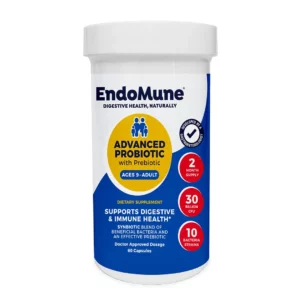
Taking a multi-strain probiotic, like EndoMune Advanced Probiotic with 10 strains of beneficial bacteria, is a smart and proven way, not only to make a daily difference in your gut health but do a world of good in treating your IBS symptoms too.
Resources
Complementary Therapies in Medicine
American College of Gastroenterology